
World Neglected Tropical Diseases (NTD) Day offers a moment not just for reflection, but for accountability. It asks us to confront the health threats that persist where services are weakest and voices are least heard. In Kenya, snakebite envenoming remains one such crisis—quiet, persistent, and deeply unequal. It continues to affect rural families, farmers, and school-going children located far from well-resourced health facilities. For survivors, the harm does not end at the bite; many live with permanent disability, social stigma, and the loss of livelihoods.

When Access to Medicines Platform (AtMP) began working on snakebite envenoming, it quickly became clear that the challenge was systemic. Myths often shaped community responses more than medical guidance, and most critically, antivenom was simply unavailable in many health facilities.
Grounding the Response in Evidence
To address these gaps, AtMP grounded its response in research across six counties, examining the availability and affordability of snakebite commodities and the socio-economic impact on survivors. This evidence shifted discussions from assumptions to lived realities, directly informing advocacy for “Last-Mile” infrastructure
Scaling Community Awareness and School Programs
Community prevention became a central focus of implementation:

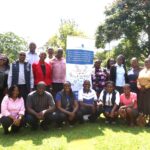
- Community Health Promoters (CHPs): Between February and July 2025, AtMP trained 50 CHPs and 12 sub-county health management team members in Vihiga County on prevention and first aid.
- Digital Accountability: An electronic outcome measurement tool enabled 65 CHPs to reach over 22,000 community members, resulting in the identification and prompt referral of 11 snakebite cases.
- School-Based Prevention: Through the Snakebite School Health Program in Kakamega and Vihiga, 200 students and 25 teachers were sensitized in early 2025 alone. These efforts were reinforced with Safiya comic books and snakebite board games to promote safer practices in households.
Milestones in Treatment and Advocacy

Improving access to treatment remains a priority for AtMP. A major milestone was achieved in 2025 when sustained advocacy in Kakamega County led to a directive requiring all Level 4 facilities to procure antivenom.
Decentralization: By June 2025, all Level 4 facilities in the county stocked at least four vials each, eliminating long-distance referrals of over 100 kilometers.
Clinical Capacity: Health workers from 12 counties were trained on snakebite management through syndromic management approaches, supported by a growing pool of Trainers of Trainers (ToTs).
Summary of Impact to Date
- Health Workers: Trained across 12 counties in specialized snakebite care.
- Community Reach: Sensitized over 1,000 CHPs and reached 22,000+ community members via digital tools.
- Education: Reached more than 2,000 students and 50 teachers through school-based programming.
- Policy Change: Contributed to the decentralization of antivenom in public health facilities.
Looking Ahead to 2026
Despite these gains, funding for snakebite interventions remains limited. Looking ahead to 2026, AtMP remains committed to expanding outreach to unreached sub-counties, strengthening county ownership of antivenom procurement, and improving data integration within DHIS and KHIS. Snakebite envenoming should no longer remain a neglected crisis. On this World NTD Day, AtMP reaffirms its dedication to ensuring that no Kenyan dies or lives with disability from a preventable snakebite.